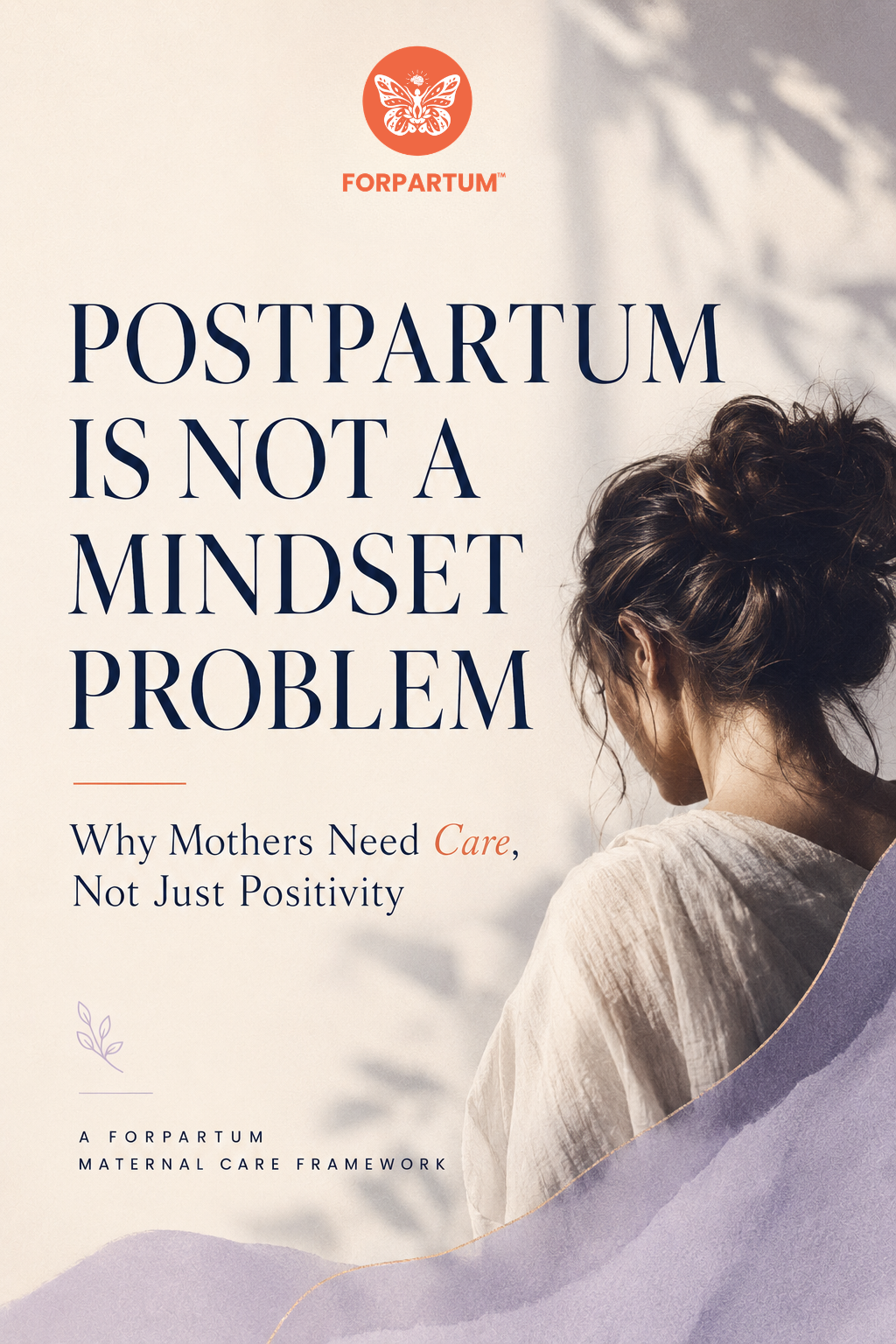
Postpartum Is Not a Mindset Problem is a neuroscience-informed maternal care guide exploring the biological, neurological, emotional, relational, and structural realities of postpartum life. Rather than framing maternal struggle as a personal failure or positivity issue, this resource examines how sleep deprivation, nervous system overload, identity transformation, hormonal shifts, isolation, invisible labor, and lack of support shape the postpartum experience.
Blending maternal health education, nervous system awareness, matrescence research, reflective prompts, and compassionate language, this guide offers mothers, practitioners, partners, and support systems a deeper framework for understanding postpartum beyond “just think positive” culture.
This is not a quick-fix wellness guide or a productivity framework. It is a reorientation toward care, regulation, support, and honest maternal reality.
Inside, readers will explore:
- Maternal neuroplasticity and postpartum brain changes
- Nervous system overload and hypervigilance
- Sleep deprivation and physiological depletion
- Matrescence and identity transformation
- Emotional overwhelm, rage, grief, and contradiction
- The hidden cost of invisible labor
- The collapse of communal postpartum support
- Postpartum depression, anxiety, OCD, trauma, and when to seek clinical help
- The difference between motivation and nervous system regulation
- What mothers actually need for recovery and support
- Language that heals versus language that harms
- Reframing maternal struggle through care rather than shame
Designed for:
- Mothers
- Postpartum professionals
- Birth workers
- Therapists
- Partners
- Family members
- Anyone seeking a deeper understanding of postpartum wellbeing