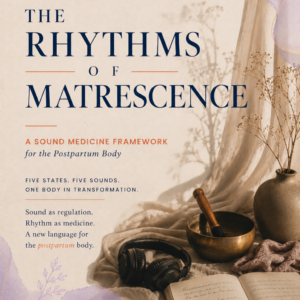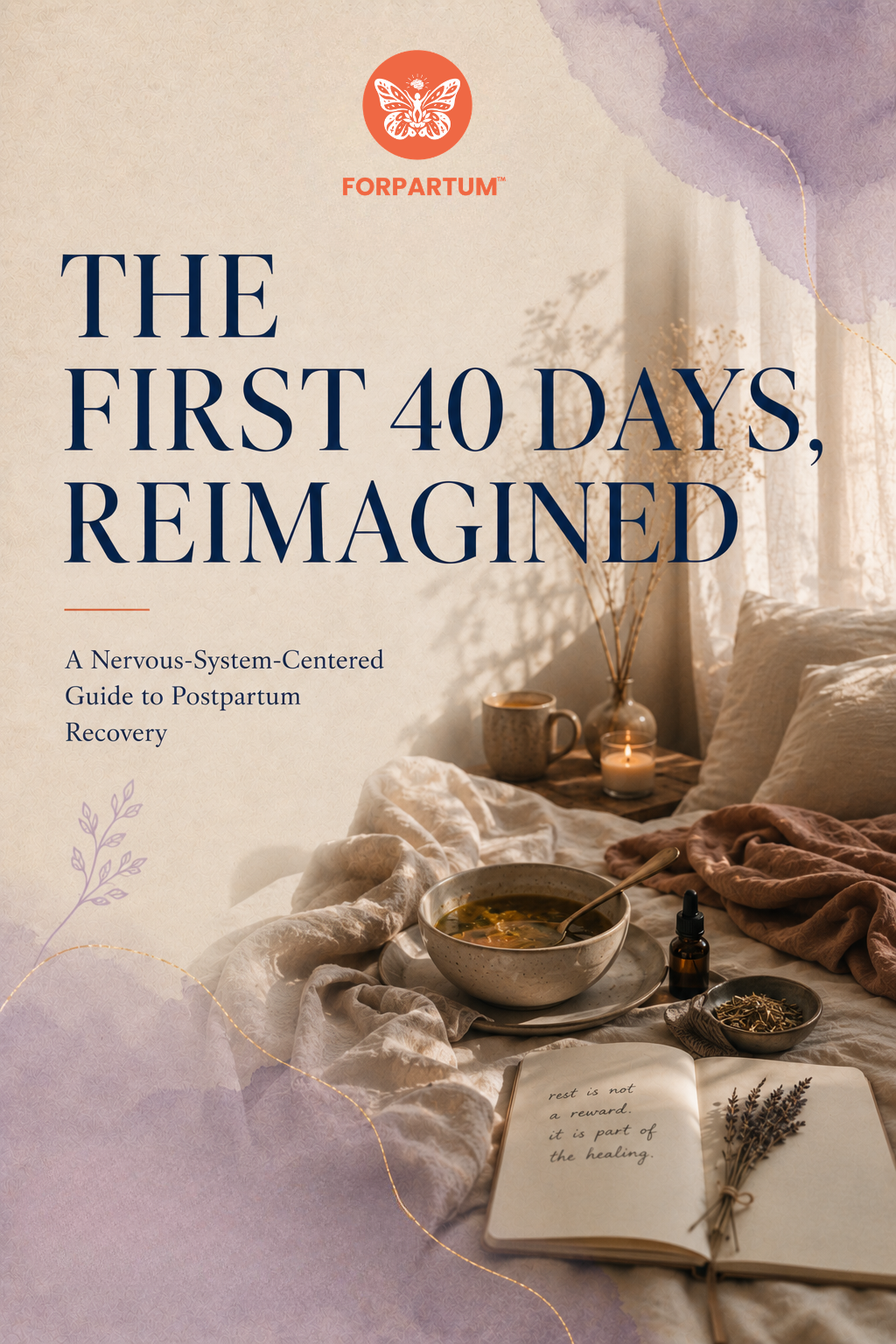
The First 40 Days, Reimagined is a modern, nervous-system-centered postpartum care guide created to support mothers through one of the most biologically, emotionally, and neurologically transformative periods of life. Rooted in the framework of matrescence, this guide explores postpartum not as a six-week recovery timeline, but as a full-body, full-brain transition that deserves deeper understanding, protection, nourishment, and support.
Blending postpartum physiology, nervous system science, traditional postpartum wisdom, nutritional support, emotional health, and reflective care practices, this guide offers mothers a grounded and compassionate framework for navigating the early postpartum period.
Inside, readers will explore:
- nervous system regulation after birth
- hormonal and physical recovery
- postpartum depletion and nourishment
- sleep, rhythm, and overstimulation
- identity shifts and emotional waves
- warmth, protection, and healing practices
- practical postpartum support strategies
- relationship and visitor boundaries
- modern postpartum challenges and the loss of the village
- reflection prompts and practitioner-informed insights
Designed for slow reading and real-life postpartum care, this guide is not about “bouncing back.” It is about understanding what the body, brain, and nervous system are truly moving through after birth.
Whether you are a mother, birth worker, postpartum professional, partner, or someone supporting a new parent, this guide offers language, structure, and care for the postpartum passage.
What You’ll Learn
- Why postpartum recovery extends far beyond six weeks
- How the nervous system changes after birth
- The role of rest, warmth, and rhythm in healing
- How hormones, depletion, and inflammation affect recovery
- What postpartum overstimulation actually feels like
- The emotional realities of matrescence
- Why many mothers feel “not themselves” postpartum
- How traditional postpartum practices supported recovery
- What modern systems often miss about postpartum care
- How nourishment impacts mood, energy, and healing
- Ways to create realistic support in a modern world
- Signs of postpartum depletion and when to seek help
- Gentle nervous system regulation practices for daily life
- How to support postpartum recovery without perfectionism
Disclaimer
Educational Disclaimer
This guide is intended for educational and informational purposes only. It is not medical advice and is not a substitute for individualized medical, psychological, psychiatric, nutritional, or therapeutic care.
The information provided reflects general postpartum education, emerging research, traditional postpartum perspectives, and nervous-system-informed wellness practices. It should not be used to diagnose, treat, cure, or prevent any medical or mental health condition.
Always consult a qualified healthcare professional regarding:
- postpartum recovery
- medications or supplementation
- pelvic floor concerns
- mental health symptoms
- breastfeeding or feeding concerns
- pain, bleeding, or physical complications
- exercise and physical rehabilitation
- any concerns related to you or your baby
If you are experiencing a medical emergency, thoughts of self-harm, thoughts of harming your baby, severe emotional distress, chest pain, difficulty breathing, heavy bleeding, or symptoms of postpartum psychosis, seek immediate medical care or emergency support.
This guide does not replace professional healthcare. It is designed to complement supportive postpartum care and offer educational insight into the postpartum experience.