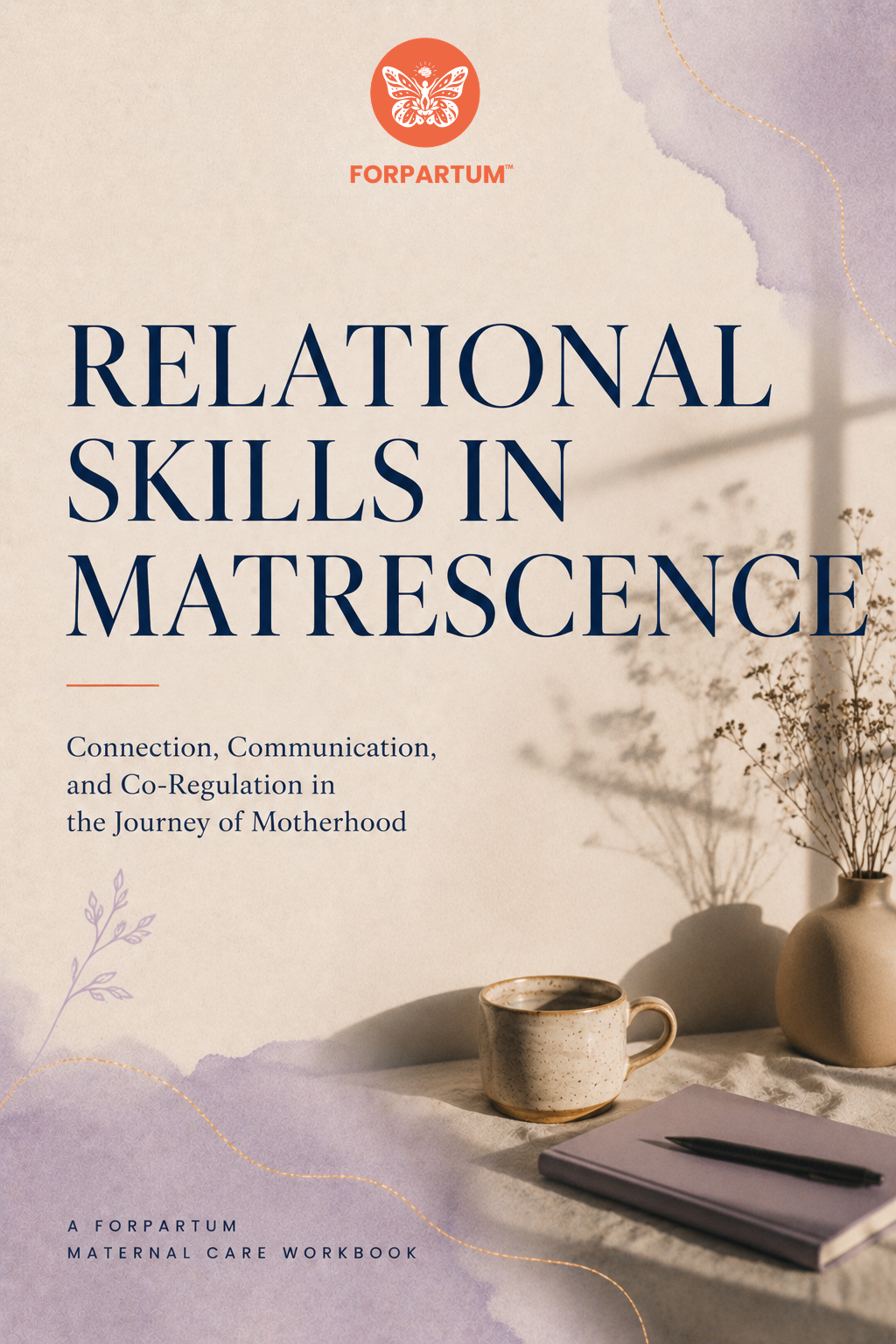
Relational Skills in Matrescence is a reflective workbook designed to help mothers navigate the emotional, relational, and identity shifts that can emerge during the transition into motherhood. Rooted in the framework of matrescence, this workbook explores how motherhood can reshape relationships with partners, friends, family, the body, and the self.
Through guided reflections, relational practices, journaling prompts, and structured exercises, readers are invited to better understand the changing emotional landscape of motherhood while developing language, awareness, and relational tools for this season of life.
Blending developmental insight, relational reflection, and trauma-aware guidance, this workbook is designed for individual use, support circles, postpartum groups, doulas, therapists, facilitators, and mothers seeking a deeper understanding of their evolving relational world.
Inside This Workbook, Readers Will Explore:
- Relationship changes during matrescence
- Partnership and co-parenting dynamics
- Invisible labor and emotional load
- Friendship shifts after motherhood
- Identity reorganization and selfhood
- Maternal lineage and generational patterns
- Body image and postpartum embodiment
- Emotional intimacy and relational repair
- Nervous-system-aware relational practices
- Reflective exercises for communication and self-awareness
- Postpartum relational grief and transition
- Supportive relational skills for navigating change
Important Disclaimer
This workbook is educational and reflective in nature and is not intended to diagnose, treat, cure, or prevent any medical or mental health condition.
The concepts explored within this workbook, including matrescence, relational change, nervous system experiences, identity shifts, and postpartum adaptation, are offered as developmental and reflective frameworks rather than universal clinical truths.
This workbook is not a substitute for:
- medical care
- psychiatric care
- psychotherapy
- crisis intervention
- licensed mental health treatment
Experiences such as postpartum depression, anxiety, OCD, psychosis, trauma responses, suicidal ideation, intrusive thoughts involving fear of harm, or significant emotional distress require professional clinical support.
Readers are encouraged to seek support from qualified healthcare professionals when needed.